Moving a successful print idea into a different coating or converting route can lead to rework if the material handoffs are left untested. Read PRINTING United 2026’s convergence theme as a prompt to review those handoffs, then evaluate one defined application on its actual materials and finishing sequence.
The PRINTING United 2026 recap describes a show bringing print markets together, with automation, AI and workflow optimization among the reported themes. The organizer’s preliminary figure of 27,000 registered attendees measures registrations, not proven production adoption or material compatibility. For printing and coating teams, our interpretation is practical: use a shared process map, but keep the receiving surface, ink, coating and finished-product acceptance specific to each job. The checklist below turns the theme into assigned questions rather than a recommendation to buy or copy a demonstrated line.
- Convergence can connect application planning and workflow discussions.
- A shared workflow does not supply a shared material qualification.
- Print and coating interfaces need identified records and owners.
- A useful follow-up begins with one job, a layer description and agreed acceptance evidence.
What did the recap establish?
The event coverage establishes the reported show context and its themes. INKISH’s September 29 article says the Expo wrapped up on September 25 in Las Vegas. The organizer-origin preliminary recap reports 27,000 registered attendees. Neither statement is evidence that a demonstrated coating process will work on a reader’s existing stock.
| Date | Event or publication | Source nature |
|---|---|---|
| September 25, 2026 | Closing date reported by INKISH | Media report of the event |
| September 26, 2026 | Preliminary recap appears in Printing Impressions | Organizer-origin account in an Alliance media brand |
| September 28–29, 2026 | INKISH and Mailing Systems Technology publish recaps | Media coverage; attendance figures attributed to organizer |
| September 30, 2026 | Organizer links to post-show coverage | Organizer publication directing readers to its media coverage |
| October 8, 2026 | This workflow interpretation is reviewed | Editorial checklist, not an on-site report |
The matching registration number in several outlets is a cross-check of reported wording, not multiple independent attendance counts. The organizer labels its statistics preliminary and subject to verification. This page does not convert them into visitor totals, equipment installations or market-share estimates.
Takeaway: Treat show statistics as reported context and material compatibility as a separate technical question.
What does convergence mean for this workflow review?
Here, convergence means considering opportunities and shared workflow practices across print applications. INKISH describes commercial, wide-format, apparel, labels and packaging, and other markets sharing technologies and workflows. Our editorial interpretation is to distinguish what a team can organize together from what still needs job-specific material evidence.
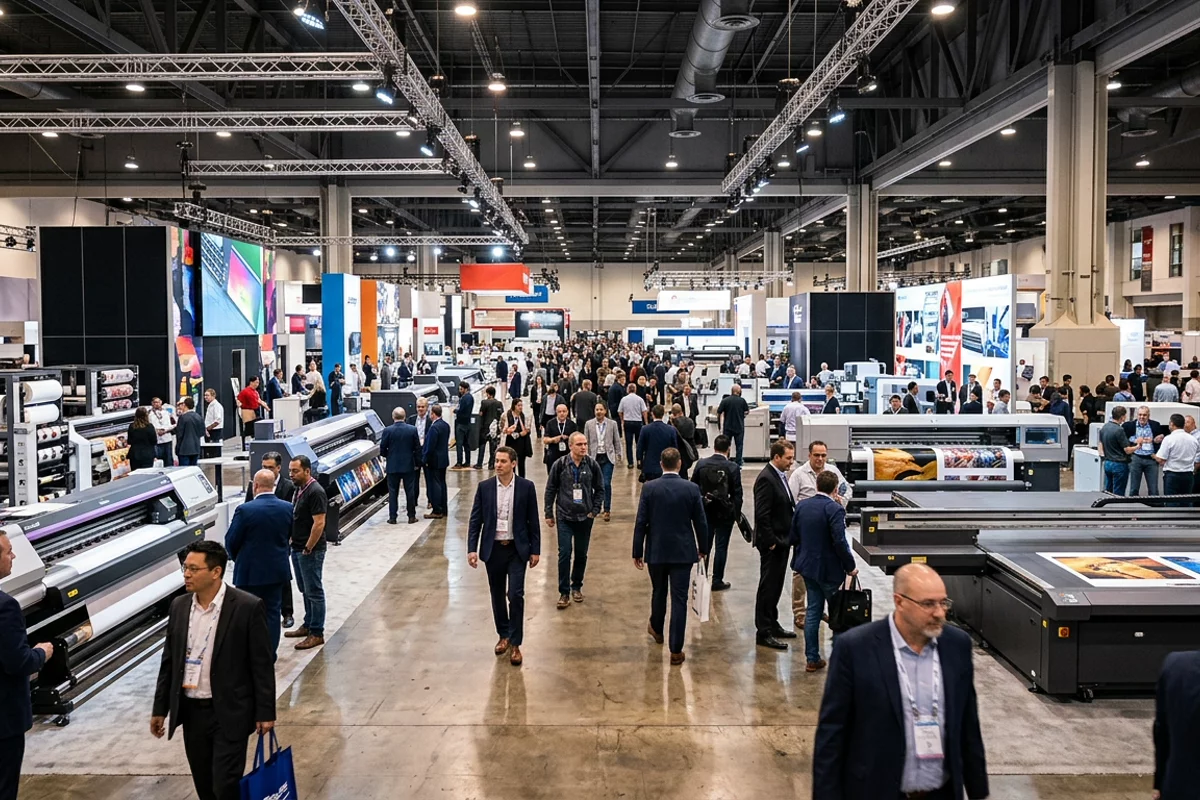
Illustrative photo — generated editorial image, not an official exhibition report or vendor endorsement.
| Shared planning question | Application-specific question |
|---|---|
| Can teams use a common job description? | Which material face receives the print? |
| Can a handoff record follow the job? | Which ink and coating are in that job? |
| Can responsibility for release be explicit? | Which inspection and tests support this product’s acceptance? |
| Can a change trigger a documented review? | Which material or process change affects this route? |
This distinction prevents the word “convergence” from becoming a claim of universal compatibility. For the underlying material question, identifying a film’s substrate and surface helps define the job before deciding whether an existing workflow can be reused.
The paper-coating dispersion explainer and metallic-coating workflow discussion provide different examples of coating questions. Neither is a substitute for confirming the materials in a new application.
Takeaway: Share the way you record decisions, while verifying each job’s material interfaces.
Who has a workflow decision to make?
Teams considering a new application, a new coating or a more connected production route have a concrete reason to follow up. They do not need to respond to every technology theme at once. Assign one decision to each process owner and request the evidence that makes that decision reviewable.
| Team or situation | Decision affected | Basis and useful record |
|---|---|---|
| Printer considering another material category | Whether the current ink and preparation route transfers | Editorial inference from the reported cross-market theme; actual stock and ink information |
| Coater receiving a newly printed stock | Whether the upstream print and downstream coating can be evaluated together | Editorial handoff question; layer description and supplier instructions |
| Converter combining print with later finishing | What evidence is needed after the final operation | Editorial acceptance question; complete process map |
| Quality manager reviewing automation | Who owns an exception or release decision | Editorial response to reported automation themes; documented responsibility |
A single contact-angle or wetting result cannot be read as a finished-product result from this news coverage. Use the contact-angle guide’s measurement explanation if that measurement belongs in the review, and define its purpose before including it in an acceptance record.
Takeaway: Choose one actual workflow decision, then assign the questions to the teams that can resolve them.
Which print and coating handoffs deserve checks?
Start where a material or information record passes from one operation to another. The table below is an editorial checklist for planning that review. It sets no treatment level, curing condition or inspection threshold; the relevant suppliers and product owners establish those against the selected construction.
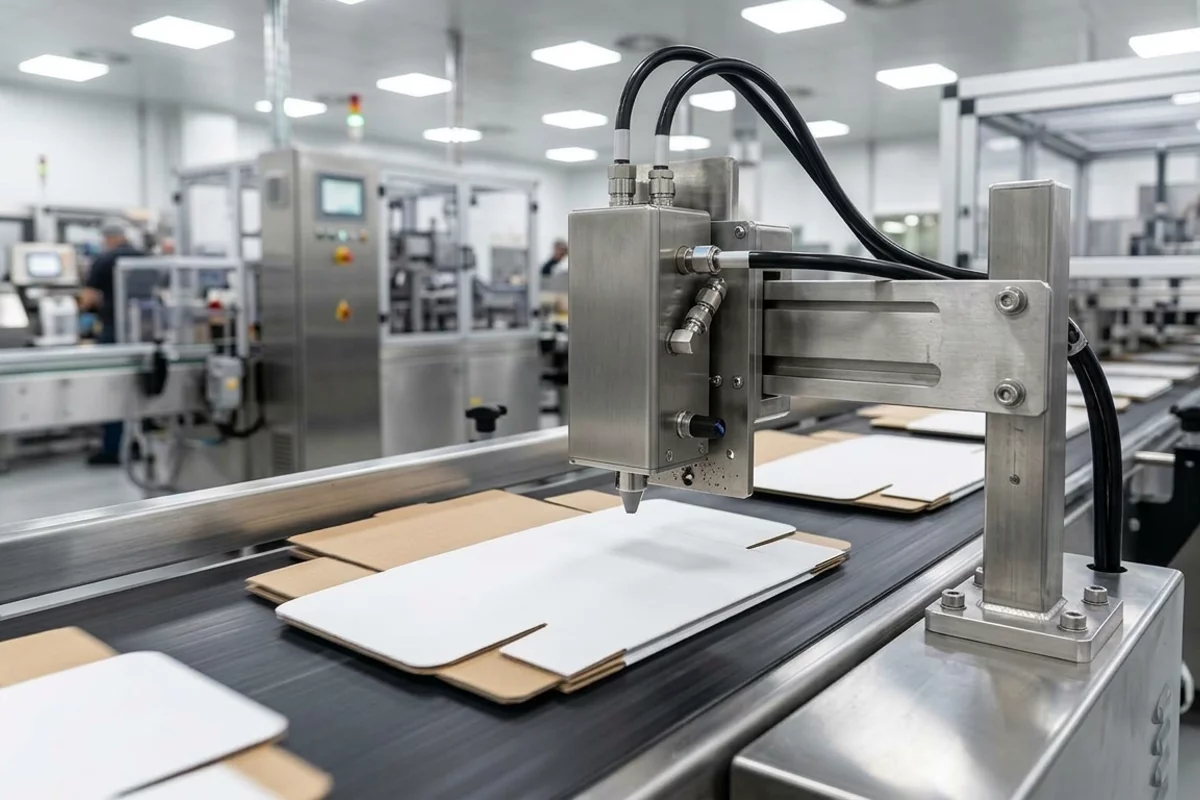
The production route maps material continuity across surface preparation, digital printing, functional coating, and finishing stages with explicit quality records at each handoff.
| Handoff | Question | Record and owner |
|---|---|---|
| Incoming stock to preparation | Which side and surface layer are being evaluated? | Marked sample and stock identification; materials/process team |
| Preparation to printing | What preparation, if any, is specified for this ink? | Applicable instructions and verification; printing engineer |
| Printing to coating | What printed surface will receive the coating, and what drying condition is specified before that handoff? | Ink/coating identities, applicable drying instructions and sample record; both process owners |
| Coating to finishing | What drying or cure condition, if applicable, is specified before the next operation? | Applicable material instructions and completion record; coating and converting owners |
| Finished sample to release | Which criteria decide acceptance? | Recorded results and release responsibility; quality/product owner |
| Material or route change to review | Who reopens the check when stock, ink, coating or sequence changes? | Named change-review owner and affected records; process/quality teams |
If wetting is part of the preparation review, the dyne test scope explains what that surface screen addresses. For the next step, the film wetting and adhesion verification guide separates the liquid-spreading question from a finished-print check.
When a package contains further interfaces, follow the review into that construction. The coffee-pouch explainer is an example of asking about the complete package rather than stopping at a printed outer surface.
Common mistake: Calling a workflow integrated while leaving responsibility for the print-to-coating handoff undefined.
Takeaway: Put a named owner and a confirming record at each handoff that affects your decision.
When should teams act on the show coverage?
Act when a show idea intersects with a defined job or process change. The publication dates identify the news context; INKISH reports the closing date, while your trial and release dates depend on the project’s evidence and approval process. The recap does not establish a deadline to adopt automation or a production timetable for any particular technology.
| Date or trigger | Suggested action | Output |
|---|---|---|
| Following the September 26–30 recaps | Select one relevant application idea | Defined job and reason to evaluate it |
| After selecting a job or proposed change | Map the existing route and proposed change | Marked handoff map |
| Before a trial | Agree material combination, owners and acceptance evidence | Reviewable trial plan |
| Before a production change | Resolve results and outstanding interfaces | Documented release decision |

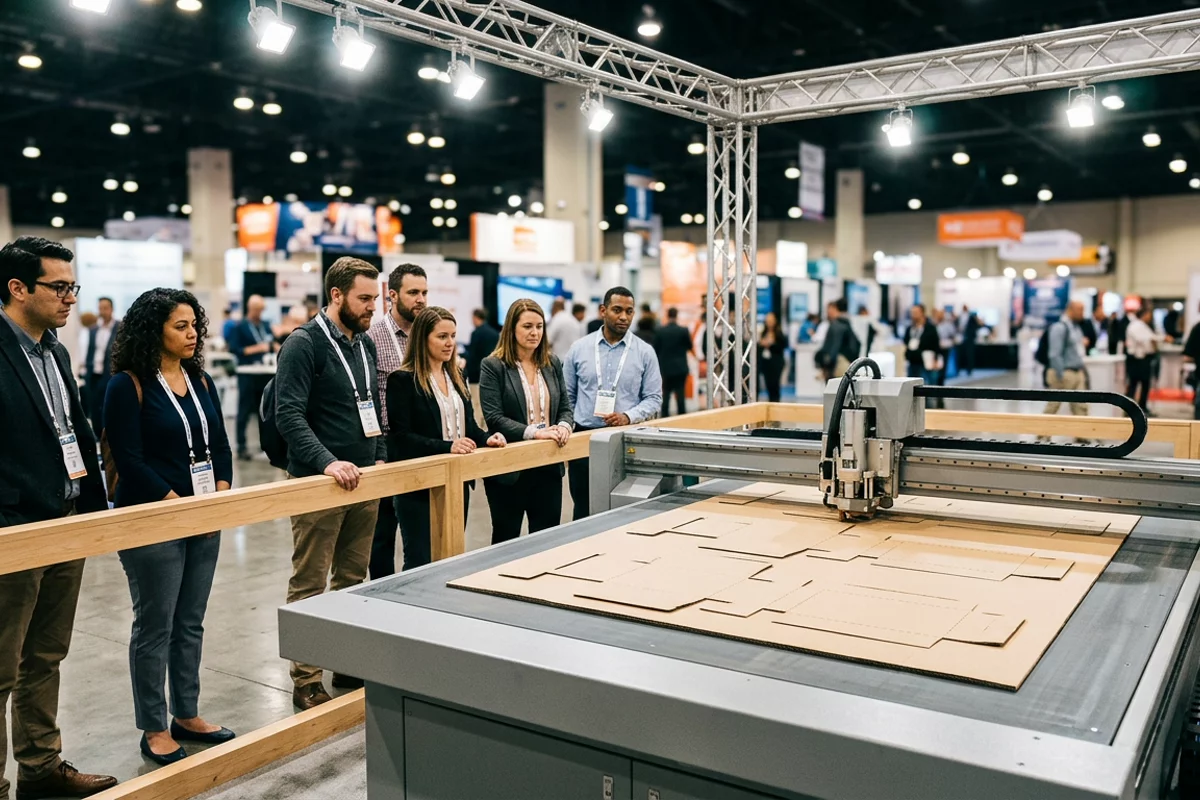
Illustrative photo — generated editorial image, not a commercial product catalogue.
The film-printing check sequence can help organize the material side of that plan. Keep the scope of each check explicit; the aim is a useful next decision, not reproducing every demonstrated feature.
Takeaway: Use the recap to identify a relevant question, then schedule work around the evidence needed to answer it.
What remains uncertain?
The reports do not provide a validated recipe for your substrate stack or quantify the effect of automation on your line. Separate the open technical questions from the verified publication facts. Each missing answer below has a responsible source and a concrete record that can support a decision.
| Open item | Who can confirm | Evidence to examine |
|---|---|---|
| Compatibility of the proposed substrate, ink and coating | Material suppliers and process engineers | Application-specific instructions and sample results |
| Effect of downstream finishing on the accepted print/coating | Converter and quality owner | Results after the actual finishing route |
| Automation’s role in a release or exception | System supplier and production/quality owners | Function description and agreed responsibility |
| Usable output and rejected work for the proposed job | Trial and production owners | Defined-condition production records |
| Final attendance statistics | Organizer | Final report, if issued |
For a new surface-analysis step, the contact-angle instrument-selection questions can help frame the measurement request. They do not establish that a measurement is necessary for every print-and-coating job.
Takeaway: Ask for the record that answers your project’s question, rather than infer a result from an exhibition theme.
When this does not apply
This interpretation is not a report of a facility visit, an equipment ranking, a safety assessment or an endorsement of a demonstrated technology. It does not establish a universal ink/coating combination or a guaranteed return from AI or automation. Retain accepted process instructions until a defined change has been reviewed under your own requirements.
For film jobs, the limits of general surface-treatment guidance remain relevant when moving from a concept to a material-specific plan. Other substrates need their own confirmed evaluation.
Takeaway: A shared planning framework helps organize a review; it does not approve a new process.
Method and sources
The event context comes from the organizer-linked Printing Impressions recap and the specified INKISH and Mailing Systems Technology coverage. The matching attendance reports are treated as repetitions of organizer information, with 27,000 retained strictly as a preliminary registered-attendee figure. INKISH’s September 29 article supplies the reported automation, AI and cross-market workflow themes.
The handoff map, responsibility table and follow-up path are this site’s editorial interpretation, compiled from public reporting and scoped to printing/coating questions. No on-site observation, experiment or independently measured production improvement is claimed. Sources and definitions were reviewed on October 8, 2026; final project decisions need application-specific records.