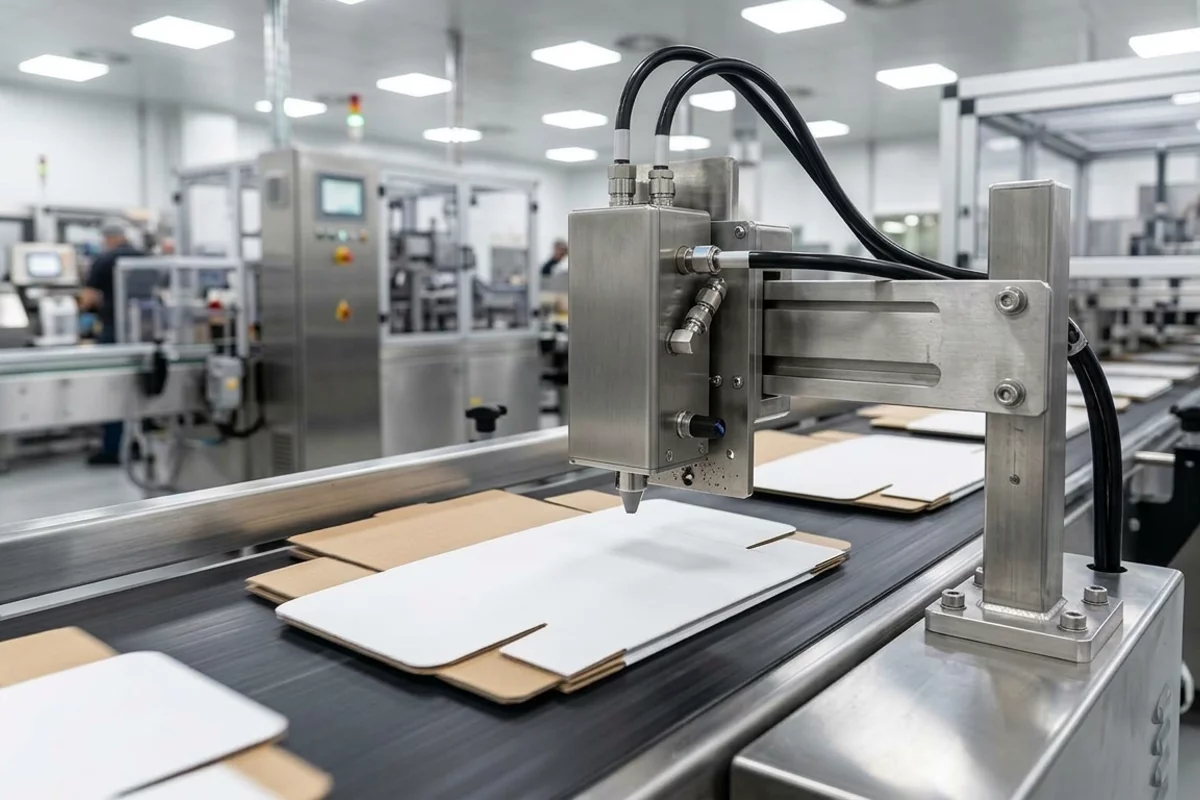
A retrofit chosen from an announced system line speed alone can lead to rework when substrate and finishing questions remain unresolved. Before adding Stream inkjet to an existing press or finishing line, identify the surface receiving the ink and check the proposed preparation, drying and downstream sequence on the actual job.
Kodak announced the KODAK PROSPER Plus 5 Imprinting System on October 5, 2026, describing a 152 metres per minute (mpm), or 500 feet per minute (fpm), system for adding Stream Inkjet Technology to existing equipment. That manufacturer figure does not establish a finished-product rate on your film or coated stock. For printing and coating teams, the useful next step is a substrate review: document the exposed surface, ask which ink and preparation are specified, and agree how print and downstream results will be accepted. No universal film treatment or drying settings follow from the announcement.
| Input or item | Value or source | Why it matters |
|---|---|---|
| Announced system speed | 152 mpm (500 fpm), Kodak’s October 5 announcement | Manufacturer specification; not a verified rate for your job |
| Receiving material | Actual stock specification and production sample | The exposed face may differ from the base material |
| Ink and preparation | Proposed combination confirmed by the suppliers | Establishes what will contact that face |
| Drying and next contact | Proposed line layout and process instructions | Identifies the next handling or coating step |
| Acceptance | Agreed sample evaluation and downstream checks | Defines the evidence needed to proceed |
What changed on October 5?
Kodak announced a new imprinting option for printers and converters seeking variable information on existing production equipment. Its examples include coding, serialization, personalization and versioning. Kodak also says the system uses KODAK EKTACOLOR Inks. The ink family is announced; the specific configuration and its compatibility with your receiving face still need confirmation. These describe the intended uses of the product; they do not answer whether a particular material stack and finishing route can use it without changes.
| Date | Publication or action | Evidence type |
|---|---|---|
| October 5, 2026 | Kodak publishes the PROSPER Plus 5 announcement | Manufacturer announcement |
| October 6, 2026 | INKISH.NEWS and WhatTheyThink publish launch reports | Media coverage of the same product launch |
| October 8, 2026 | This substrate checklist is reviewed | Editorial interpretation; no retrofit trial |
The reports reinforce what Kodak announced, rather than independently proving production results. This article uses the manufacturer source for the model and speed, and treats questions about unsupported substrate combinations as open. The announced integration concept is a starting point for a review, not a completed compatibility assessment.
For film, begin with the substrate-and-ink matching guide before extending a news specification into a production plan.
Takeaway: Separate the new imprinting option from the evidence needed to approve its use on your line.
Who needs a substrate review?
The review matters when a new printed layer would touch a material or pass through an existing finishing process. Assign the questions across prepress, printing, coating and quality rather than asking the press operator to infer the whole process from the launch description. Each role needs a different piece of evidence.
| Team | Decision affected | Record to obtain |
|---|---|---|
| Printing engineer | Which face receives the variable information? | Stock specification and marked sample |
| Coating or converting engineer | What contacts or covers the new print next? | Layer stack and finishing sequence |
| Prepress or data team | Where does the variable content belong? | Agreed artwork and data specification |
| Quality team | What makes the printed and finished result acceptable? | Application-specific test and acceptance plan |
| Production planner | What is the usable rate for the complete job? | Results from the proposed configuration, not the headline alone |
These are editorial responsibilities for planning a trial. They are not claims that Kodak’s launch changed an existing customer’s process. If you need the mechanics of surface measurement, the contact-angle guide helps specify a wetting observation without turning it into finished-print acceptance.
Takeaway: Give each process owner a defined question and a document that can answer it.
Which surface actually receives the ink?
Identify the outermost layer at the intended print location. A stock described as paper, plastic or coated material does not, by that name alone, identify the receiving face. Record the side, exposed coating or primer, previous printing and any planned preparation so the suppliers can evaluate the actual interface.
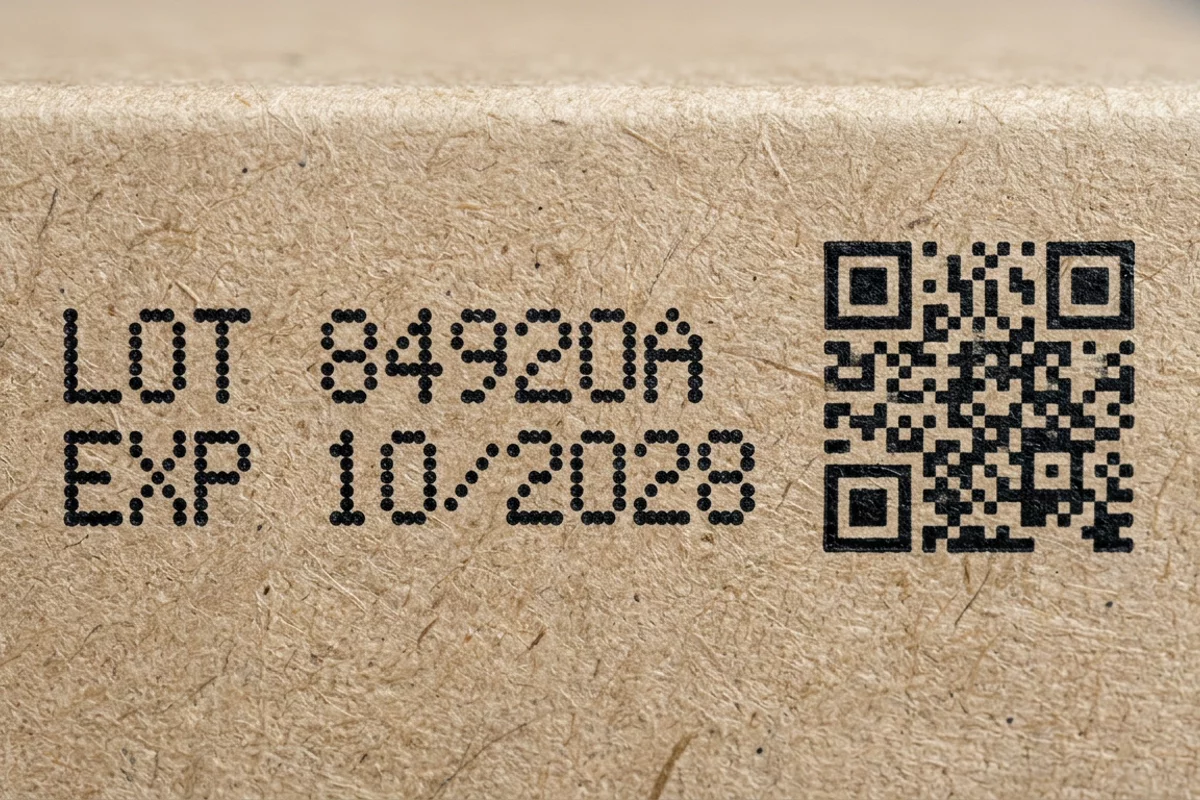
Illustrative photo — generated editorial image, not an equipment specification or print warranty.
| Question | Record | Next check |
|---|---|---|
| Which side is printed? | Marked roll or sheet sample | Match it to the proposed line path |
| Is the base exposed or already coated? | Material and surface-layer identification | Ask the supplier about that exact combination |
| Is there existing print at the location? | Current artwork and ink information | Confirm the proposed overprinting sequence |
| Is treatment or primer proposed? | Named process and material instructions | Establish compatibility and verification |
| What covers the print afterward? | Downstream coating, adhesive or laminate information | Agree acceptance after finishing |
For general film preparation, use the printing-method and pretreatment explanation. When a coating is part of the receiving face, the metallic-coating workflow questions offer a separate example of checking layers and interfaces; that article is not approval to imprint onto that coating.
Common mistake: Treating the base material name as a complete description of the surface receiving the ink.
Takeaway: Hand over a marked sample and layer description, not just a stock name.
How do pretreatment and drying fit into the line?
Map them around the proposed print location and the next physical contact. Kodak’s inks-and-primers data sheet describes primers as a way to prepare a receiving surface for its inks across a range of substrates. The older document names OPTIMAX Primers alongside EKTACOLOR and KODACHROME Inks, but does not provide a PROSPER Plus 5 recipe or approved-stock list for your job. Ask whether preparation is needed and where drying belongs in the proposed configuration.
The imprinting sequence connects substrate receiving surface, optional surface preparation or priming, high-speed continuous inkjet deposition, inline drying, and final finishing.
| Interface to review | Question for the supplier | Evidence to retain |
|---|---|---|
| Surface to ink | Is this material face qualified for the proposed ink? | Material/ink combination and relevant sample results |
| Preparation to printing | Is a treatment or primer specified, and how is it verified? | Applicable instructions and verification method |
| Printing to handling | What drying arrangement supports the next contact? | Proposed configuration and trial record |
| Print to coating or finishing | What result is expected after the downstream step? | Finished-sample evaluation and acceptance |
The dyne-testing guide explains a film wetting screen; it supplies no universal target for this retrofit. Likewise, contact-angle measurement describes a liquid–surface observation rather than a printhead qualification. Record the method only when it answers a relevant question on the selected material.
Avoid choosing a treatment power, drying temperature or primer amount from this article. The public sources checked here do not establish those settings for a particular stock. If the line includes paper coating, the paper-dispersion explainer provides background questions about the coating’s function, not settings for this inkjet system.
Takeaway: Confirm each material and process interface before adopting a line layout or settings.
When should a retrofit move to trials?
Move from announcement review to a trial when the intended job and the missing evidence are specific enough to test. Set acceptance before the trial: otherwise a visually attractive sample may leave questions about later handling, coating or use unanswered. The schedule below is a proposed planning sequence, not a Kodak installation timetable.
| Date or trigger | Action | Output |
|---|---|---|
| October 5–6, 2026 launch coverage; reviewed October 8 | Identify whether variable printing solves an actual job requirement | Defined application and intended print location |
| Before layout approval | Review material stack, preparation and drying with suppliers | Configuration to evaluate |
| Before trial approval | Agree printed and finished-sample acceptance | Written evaluation plan |
| Before a production decision | Examine trial results on the actual route | Documented decision and unresolved conditions |
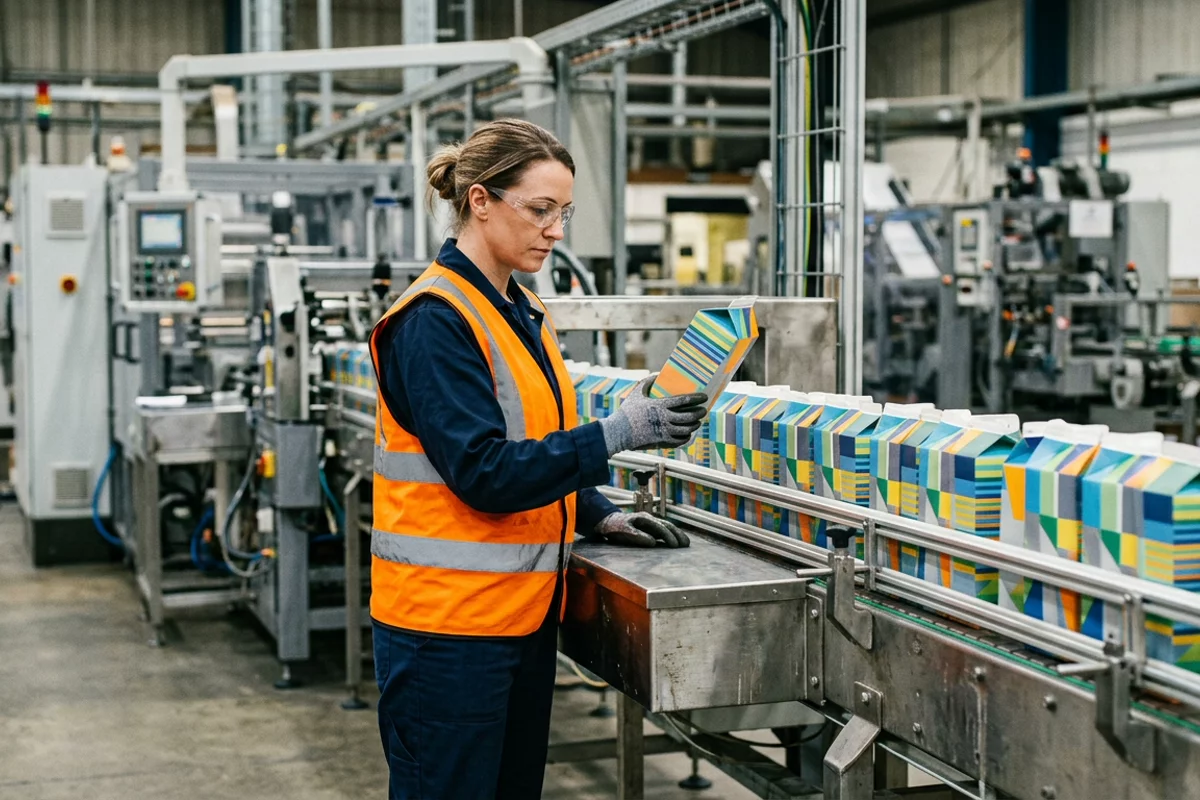
Illustrative photo — generated editorial image, not an acceptance trial or performance guarantee.
Use the film-printing validation sequence as background for structuring a sample review. It does not establish which tests, thresholds or production speed apply to PROSPER Plus 5.
Takeaway: Define the job and acceptance evidence before requesting a trial or relying on a headline speed.
What is still missing from a substrate decision?
The launch announcement is not a complete material qualification document. The unresolved items below belong with the relevant supplier and process owner. They can be resolved without assuming that an advertised application category covers every stock, coating or ink already used on your press.
| Unknown | Who can confirm | Confirming record |
|---|---|---|
| Exact supported receiving face and ink combination | Kodak and substrate supplier | Application-specific compatibility information |
| Need for preparation or primer | Ink, system and material suppliers | Proposed preparation instructions |
| Drying arrangement and downstream contact conditions | System integrator and process engineer | Line configuration and sample evidence |
| Adhesion and finished-product acceptance | Quality and downstream process owners | Agreed results on printed and finished samples |
| Installation arrangements and order timing | Equipment supplier | Project-specific written confirmation |
If the job is a laminate or pouch rather than an isolated printed web, follow the result into that finished construction. The coffee-pouch workflow explainer shows why a packaging application brings additional interfaces; it does not prove this system is suitable for that package.
Takeaway: Resolve the material stack and finishing evidence before declaring a retrofit suitable.
When this does not apply
This is an industrial retrofit planning checklist. It is not a desktop transparency-media recommendation, an approved-substrate list, a universal dyne target or a prescription for dryers. It makes no safety, food-contact, print-quality or production-rate guarantee. Application-specific confirmation remains necessary even when a broad use category appears in marketing material.
Common mistake: Copying a film wetting target from another ink system and treating it as this system’s requirement.
For the measurement boundary, consult the film wetting test explanation. Keep its scope separate from acceptance of a particular inkjet retrofit.
Takeaway: Use the checklist to prepare a focused technical review, then decide from the confirmed configuration and results.
Method and sources
The model name and 152 mpm (500 fpm) speed are attributed to Kodak’s October 5, 2026 announcement, checked against the two October 6 reports. Those reports cover the same launch and are not counted as independent production trials. The older inks-and-primers data sheet supports the existence of substrate-specific surface-optimization questions, not qualification of a particular film on the new system.
All sources were accessed on October 8, 2026. The figures and checklists are editorial illustrations compiled from public information; no press trial, supplier comparison, cost calculation or process settings were generated. The printing-on-film guide covers the wider material-selection task separately.