Switching binders on a carbon claim without a change record risks coating failures that nobody can trace back to the lot. BASF announced on 23 September 2026 that paper coating binders made at its Ludwigshafen site are now available with a product carbon footprint about 20% to 45% lower than the conventional versions, assigned by a mass balance method.
If you run a paper or board coater and are asked about BASF’s reduced-PCF binders, here is what the claim covers. BASF says the rPCF dispersions come from an unchanged process, so customers can switch as a drop-in without requalification. The 20% to 45% figure is a cradle-to-gate number, assessed case by case against the matching conventional BASF product and allocated by mass balance. TÜV Rheinland certified BASF’s calculation method against the Together for Sustainability guidance, not each product’s reduction. Grades, US supply and prices are not in the release. Treat the switch as a normal raw-material change and record it.
Key points:
- What happened: BASF launched a reduced product carbon footprint (rPCF) portfolio of paper coating dispersions (release P-26-158, 23 September 2026).
- The number: about 20% to 45% lower PCF than the corresponding conventional product, cradle-to-gate, case by case.
- The method: mass balance allocation of lower-PCF raw materials, renewable electricity and lower-PCF steam.
- The gaps: which grades, which regions, what price, and how auditors treat the figure.
What BASF announced on 23 September 2026
BASF issued trade news release P-26-158 on 23 September 2026 launching paper coating binders with a reduced product carbon footprint, produced at its Ludwigshafen Verbund site. For the rPCF claim, the primary source checked here is BASF’s own release; a Packaging Europe story two days later repeats it.
| Event | Date | Source | Source type |
|---|---|---|---|
| rPCF paper coating dispersions launched; Ludwigshafen-made binders “now available” in rPCF versions | 23 Sep 2026 | BASF release P-26-158 | Supplier announcement |
| Trade-press rewrite of the release | 25 Sep 2026 | Packaging Europe | Media rewrite of the same release |
| BASF US paper coatings product page read; it lists binder brands but does not mention rPCF | 7 Oct 2026 | BASF US product page | Supplier product page |
The release quotes Thomas Schiele, vice president for adhesives, fibre bonding, printing, paper and packaging, describing the portfolio as “a cost-effective option for contributing to relevant CO2 savings.” No price or cost comparison accompanies that statement.
Takeaway: As of 7 October 2026, neither the release nor BASF’s US product page links the rPCF claim to named US grades.
What “20% to 45% lower PCF” means, and what it does not
The figure is an allocated, cradle-to-gate footprint compared with BASF’s own conventional product, not a measured change in what is inside a given drum. BASF explains that a specified share of conventional raw materials or utilities is replaced with lower-PCF alternatives at the site, and that share is then allocated to the rPCF products. Each term in the claim has a limit worth writing down before anyone repeats the number.
| Term in the claim | BASF’s definition | What it does not tell you |
|---|---|---|
| Product carbon footprint (PCF) | Cradle-to-gate emissions, calculated according to applicable methodologies | Emissions from transport to you, your coating line or end of life |
| About 20% to 45% lower | Assessed case by case against the corresponding conventional BASF product | The figure for your grade, or a comparison with another supplier |
| Mass balance approach | A share of conventional inputs replaced with lower-PCF alternatives, then allocated to rPCF products | That each delivery physically contains those alternative inputs |
| Levers used | Lower-PCF raw materials, electricity from renewable sources, lower-PCF steam | The split between levers for any product |
| TÜV Rheinland certification | Conformance of BASF’s calculation methodology with Together for Sustainability guidance | An independent check of the reduction on specific products |
| Drop-in, no requalification | Manufacturing process unchanged | Results on your coating formulation, line and base sheet |
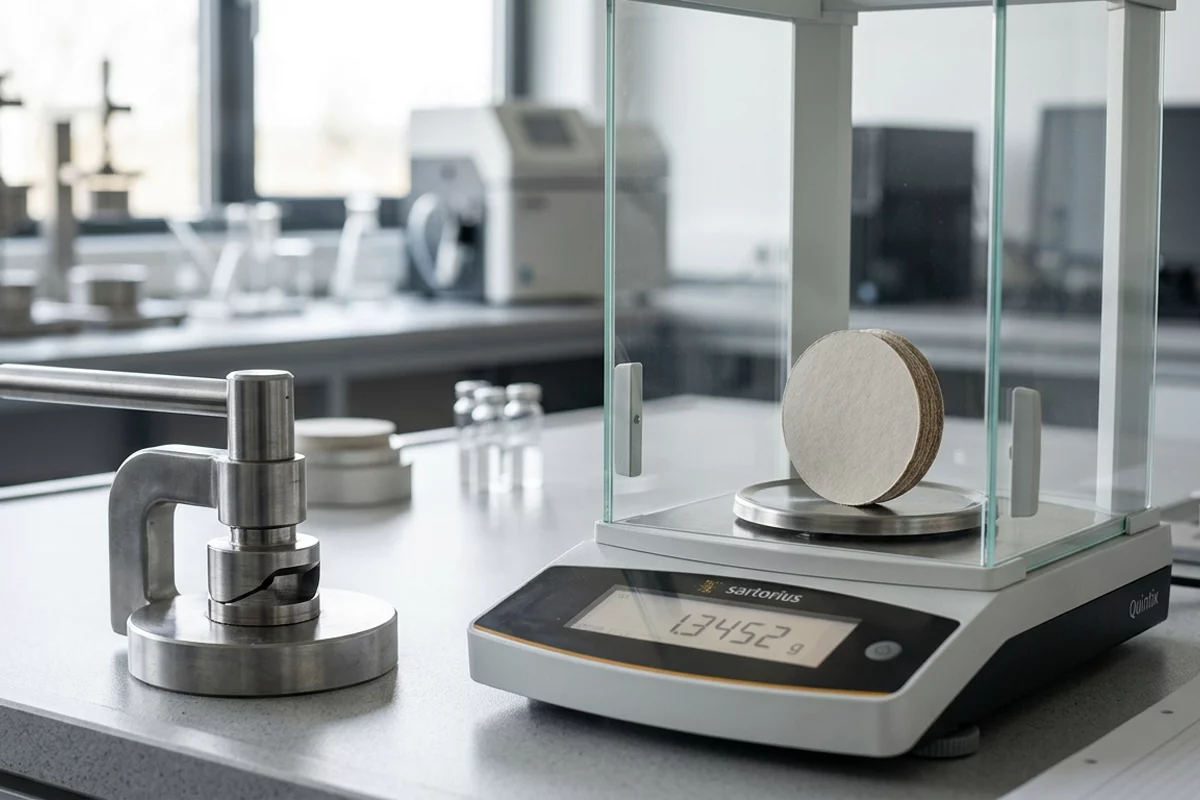
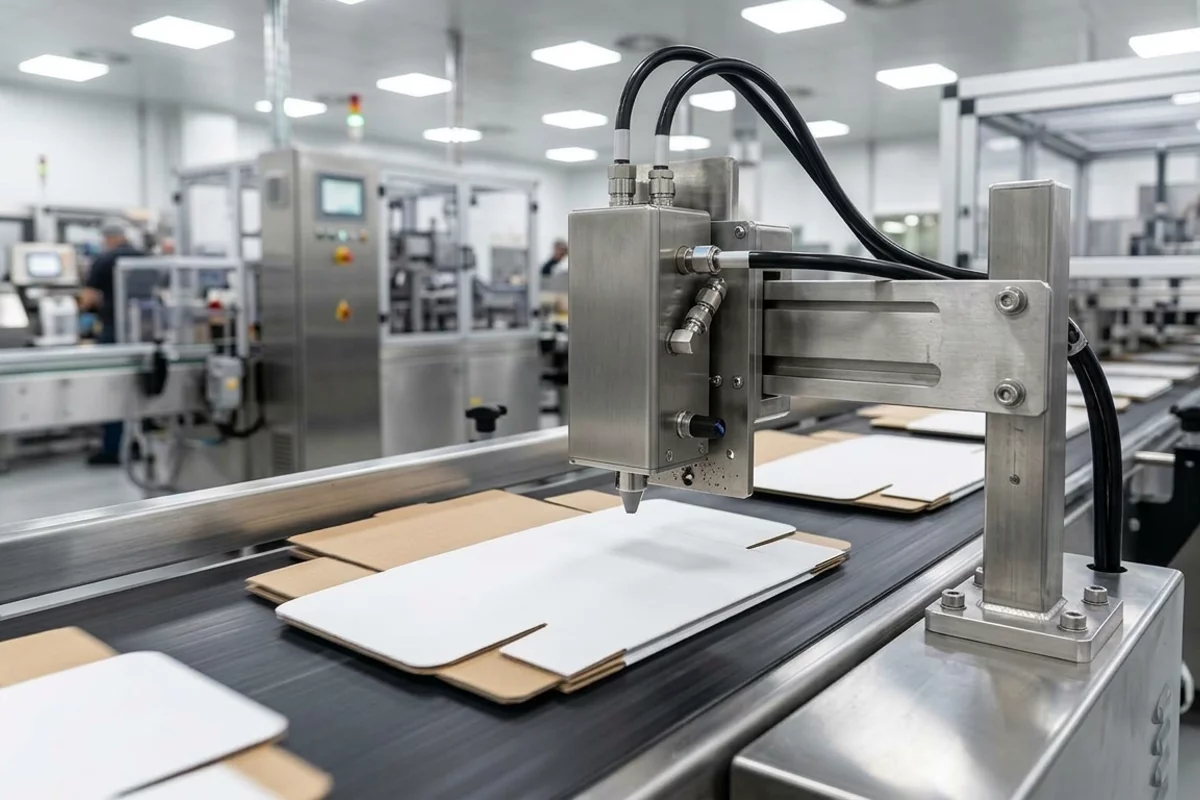
Illustrative photo — generated editorial image, not a specific vendor formulation or test certificate.
Common mistake: Reading “TÜV Rheinland certified” as an audit of the 20% to 45% reduction. The certificate, as BASF describes it, covers its calculation methodology.
Common mistake: Telling a customer the coating now contains low-carbon raw materials. Under mass balance, the lower footprint is an allocation across the site’s output.
Takeaway: Quote the figure with its three qualifiers attached: cradle-to-gate, case by case, mass balance.
Who this affects
The release targets paper and board producers that buy coating binders, and through them the converters and brand owners who need purchased-goods emissions data. Readers in the US have an extra step, because the release names only Ludwigshafen production.
| Reader | Practical impact | Basis |
|---|---|---|
| Coating and paper mill technical staff | A raw-material change to validate if purchasing switches | Release: drop-in claim |
| Purchasing teams | Grade availability, price and lead time to confirm | Release gives none of these |
| Sustainability and carbon accounting staff | A supplier PCF figure to evaluate for Scope 3.1 reporting | Release: designed for Scope 3.1 targets |
| Converters and brand owners downstream | A possible input to their own purchased-goods data | Indirect, via their board supplier |
| US buyers | Supply from Ludwigshafen only, as far as the release says | Release names no US production |
BASF’s US paper coatings page lists three binder brands: Acronal, aqueous dispersions of acrylic ester and styrene copolymers at about 50% solids; Styronal, styrene-butadiene copolymer dispersions at about 50% solids; and Basonat, a customisable binder. The page does not say which of them, if any, are offered in rPCF versions. Coated board that is later printed or converted raises its own surface questions, covered in our guide to printing on plastic film for film-laminated structures.
Takeaway: US readers should first ask whether their exact grade exists in an rPCF version and where it would ship from.
When to act
BASF says the rPCF binders produced at Ludwigshafen are available now, but the release gives no regional dates, grades or prices. The timing for most readers is set by their own reporting cycle and change-control lead time, so the useful sequence is a set of supplier requests rather than a launch date.
| When | Action | Basis |
|---|---|---|
| Now | Ask BASF which of your grades exist as rPCF and where they ship from | Release: Ludwigshafen products available since 23 Sep 2026 |
| Before ordering | Request a grade-specific PCF statement, supply terms and price | Not given in the release |
| Before the first rPCF lot | Open a change record and plan the comparison in the section below | Your own change-control procedure |
| Before reporting | Agree with your carbon accounting adviser how the figure is used | Your reporting cycle |
The material rollout timeline tracks biomass-balanced coating dispersion announcements against commercial availability and production mill trial milestones.
Takeaway: Start the supplier questions now if the figure is meant for this reporting year.
What is still open
The key unknowns are which grades exist as rPCF, the reduction for your grade, and US supply; four more items follow. The table assigns each to the party who can close it.
| Open item | Who can confirm | Document that closes it |
|---|---|---|
| Which grades exist as rPCF | BASF | Grade list with rPCF designation |
| PCF reduction for your grade | BASF | Product-specific PCF statement with method and boundary |
| US supply and lead time | BASF US | Written supply confirmation |
| Price or premium | BASF | Written offer |
| Acceptance of mass-balance figures in your report | Your carbon accounting adviser or auditor | Your reporting methodology note |
| Performance on your formulation | Your lab and BASF technical service | Your own trial records |
| Independent verification of the reduction | BASF | Any third-party verification statement, if one exists |
The performance line is the one your own lab can close; the next section sets out a minimal record, and for board that is printed afterwards, our explainer on ink adhesion and pretreatment lists the print-side checks.
Takeaway: Do not let the portfolio-level range stand in for your grade’s PCF data; agree its use in reporting with your adviser.
How to check incoming consistency after a switch
A light, documented comparison covers certificates of analysis, the same coating formulation, coated-surface wetting and an end-use trial. BASF says the process is unchanged and no requalification is needed; we suggest recording the switch under your own change-control procedure anyway. The checks below give you a record for the lots and indicators you compare. They do not test the carbon claim, and how many runs you need is a decision for your own quality plan.
| Check | Why it matters | What to record |
|---|---|---|
| Compare certificates of analysis | Confirms the rPCF lot falls inside the same specification | Solids, viscosity, pH and any other specified values, both lots side by side |
| Run the same coating formulation | Isolates the binder as the only change | Formulation sheet, batch numbers, line conditions |
| Measure coated-surface wetting | Shows whether wetting differs between lots under agreed conditions | Water contact angle on the coated sheet, same method and conditions both times |
| Print or convert a trial | The end use is the real test | Print or adhesion results against your normal acceptance criteria |
| File the change | Traceability if a defect appears later | Change record linking item codes, lots and results |
For the wetting step, ASTM D7334 describes advancing contact angle measurement on coated surfaces and substrates with a sessile drop, and states that it does not measure surface tension directly. Dyne test fluids are a weaker fit on paper: Diversified Enterprises notes that a test fluid that permeates a fibre substrate and swells it gives an unrealistically easy wetting result. On extrusion-coated or film-laminated board, the dyne test procedure applies to the plastic surface, and our notes on reading dyne results explain why readings drift.
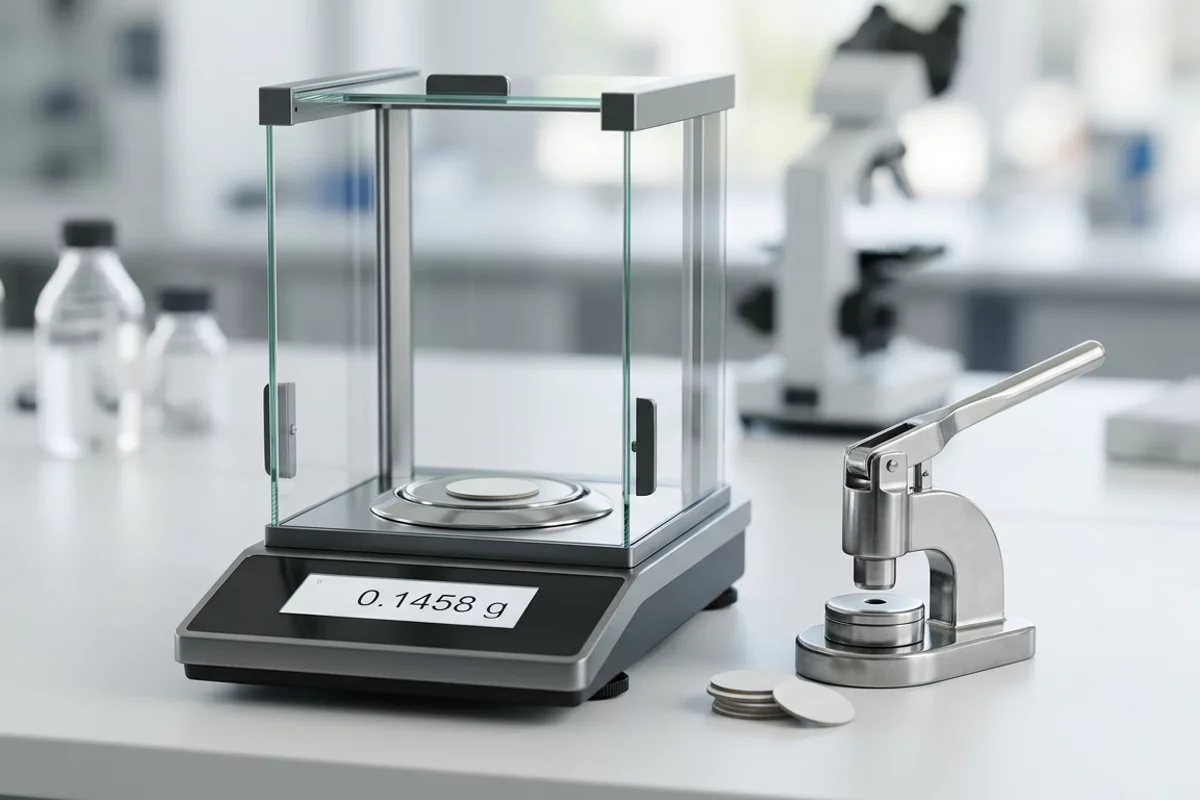
Illustrative photo — generated editorial image, not an official certified test record.
Takeaway: Keep the comparison small and documented, and let your quality plan set how much evidence a switch needs.
Our reading
Our reading is that BASF’s release is precise about its method and vague about scope, so a US coater should treat it as a reason to request grade-level documents rather than as a purchasing basis. Other launches we covered this month follow the same pattern of a real announcement with supplier-only evidence: Stahl’s Senoprint metallic coatings, Kelpi’s seaweed-based sachet coating and SunDance’s coffee valve pouches.
Takeaway: Use the definitions in BASF’s own footnote when you repeat the claim, and do not round it into a promise.
When this does not apply
This explainer reads BASF’s release and US product page as of 7 October 2026. It does not apply in these cases:
- You need a carbon accounting ruling. Nothing here decides how a mass-balance figure is treated in your report.
- You buy binders from another supplier. The definitions above are BASF’s.
- BASF has published grade-specific PCF statements or US supply details after 7 October 2026. Those replace this summary.
- You need formulation advice. The consistency checks above are a record-keeping routine, not a recipe.
More coating and print topics are in Films and Printing, and wetting and surface preparation are covered under Surface Treatment.
Takeaway: Re-check BASF’s own pages before relying on this summary for a purchase or a report.
How we checked this
We read BASF release P-26-158 and its US paper and paperboard coatings page on 7 October 2026. The Packaging Europe story repeats the release and counts as one source; we did not use its wording where it differs. Test method scopes come from ASTM’s public abstract page, and the note on paper wetting from Diversified Enterprises’ published procedure. We did not test any BASF product. See About for how this site works.
Takeaway: Check BASF’s current pages and your grade’s documents before relying on this summary.
Last updated 7 October 2026 (first published).