Coating a board before its preparation has been checked can turn a cleaning question into a coated-assembly rework problem. Treat KYZEN’s Penang expansion announcement as a reason to review supply and process support, while keeping cleaning, surface assessment and coating acceptance as separate decisions.
KYZEN announced a new Southeast Asian headquarters and production facility in Penang, Malaysia. That announcement describes intended improvements in capacity, delivery and technical support; it does not validate a cleaning-and-coating process for your PCB. For an assembly headed for conformal coating, identify the residues and materials, follow the selected coating’s preparation instructions, and retain evidence from the actual assembly. This page provides a handoff checklist, not a cleaning recipe or a claim that the new facility improves board reliability.
- The news concerns cleaning chemistry supply and support.
- Surface preparation belongs to the selected assembly and coating system.
- A wetting measurement answers a different question from coating adhesion or electrical reliability.
- A supplier change deserves a documented review before it changes a released process.
What did KYZEN announce?
KYZEN’s company announcement describes the opening of a new headquarters building and production facility in Penang. It says the location is designed to expand production capacity, improve delivery and strengthen technical support. Those are company statements about the facility’s purpose, rather than measured results for a customer’s production line.
| Date or timing | Event or publication | Source nature |
|---|---|---|
| September 2026 | Dateline in KYZEN’s facility announcement | Company announcement; exact opening day not given |
| October 1, 2026 | SMT Today publishes the Penang news | Media reproduction of the company announcement |
| October 8, 2026 | This process explanation is reviewed | Editorial interpretation; no facility visit or assembly tests |
The two publications describe the same announcement. They do not provide independent evidence of shorter lead times, a particular chemistry’s suitability, or coating performance. A US manufacturer sourcing through a distributor still needs confirmation of the supply route relevant to its own orders.
Takeaway: Use the announcement to ask about your supply arrangements; keep production acceptance tied to your assembly records.
Why verify preparation before coating?
Preparation is an input to coating, rather than a result established by applying coating. A separate cleaning operation belongs in the sequence where the selected materials and approved process require it; a qualified process may establish a different preparation route. One concrete manufacturer example is MG Chemicals’ 422B Liquid data sheet: its preparation section calls for removing oils, dust and other residues. That instruction belongs to that product; it is evidence that preparation matters, not permission to use the same cleaner on every board.
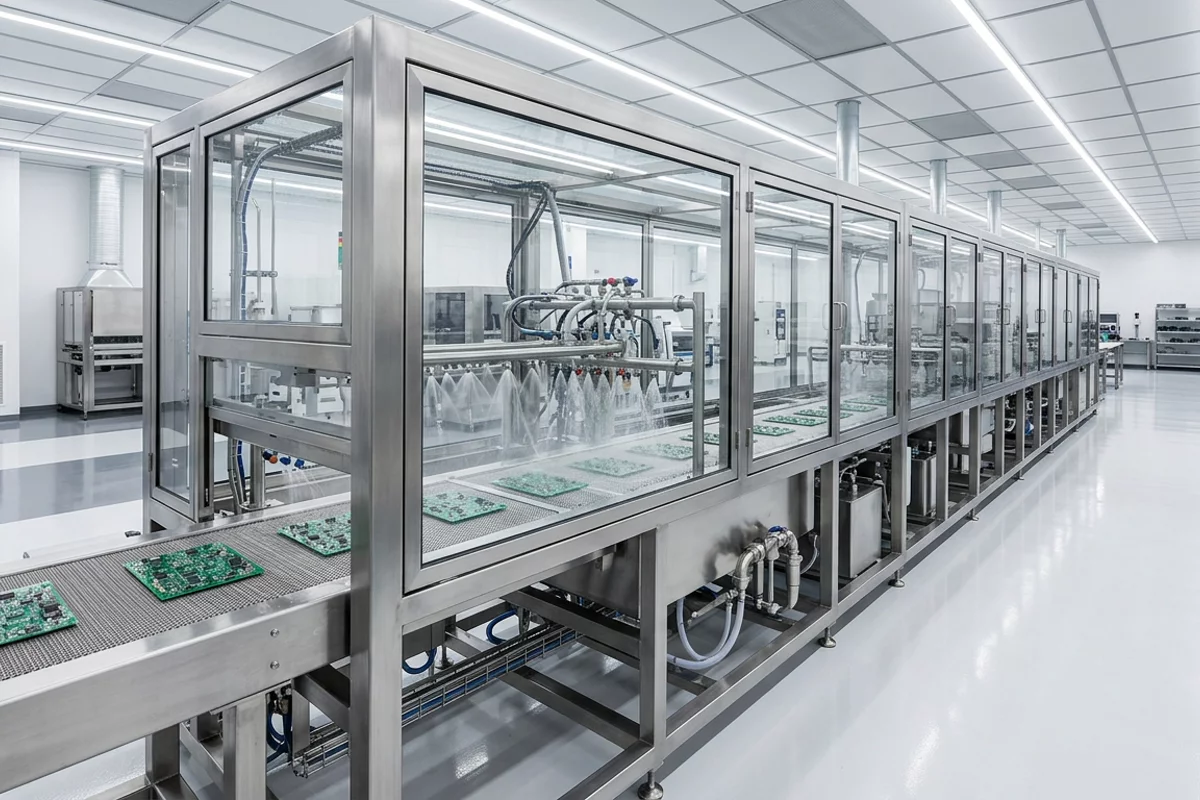
Illustrative photo — generated editorial image, not a formal cleanroom validation or process release.
| Handoff | Record to carry forward | Question for the process owner |
|---|---|---|
| Assembly to preparation review | Board finish, solder mask, flux and other introduced materials | What residues and sensitive components are present, and is cleaning required? |
| Cleaning, where required, to preparation release | Approved chemistry, process record and drying status | Has the selected preparation been checked on this assembly? |
| Preparation to coating | Coating identity, masking plan and handling record | Does this match the coating supplier’s instructions? |
| Coating to acceptance | Application and cure record; agreed inspection and test results | What evidence releases the coated assembly? |
This table is an editorial record structure. It sets no concentration, rinse specification, drying time or acceptance threshold. Ask the material suppliers to resolve those details against the actual assembly and your approved quality plan.
The broader distinction between liquid spreading and a finished bond is explained in the what a contact angle tells you. For the parallel problem in printing, identifying the actual receiving surface shows why material identity comes before an equipment choice.
Takeaway: Record the applicable preparation route and its release evidence before coating.
Who should review the announcement?
The announcement is most actionable for teams with a connection to the affected supply network, or with a pending process change. It does not call for every coating line to alter its recipe. The table separates the announcement’s commercial implications from the checks suggested here for engineering and quality teams.
| Reader | Possible action | Basis |
|---|---|---|
| Purchasing or regional supply team | Confirm distributor, manufacturing source and order support | KYZEN describes intended delivery and capacity improvements |
| Cleaning process engineer | Ask whether the supplied chemistry or technical documentation changes | Editorial change-review question; no formulation change is established |
| Coating process engineer | Retain the approved preparation and coating instructions | Product-specific preparation requirement in the coating data sheet |
| Quality engineer | Identify the evidence needed before releasing a changed process | Editorial recommendation; the facility announcement contains no assembly validation |
Keep the questions assigned to people who can answer them. A delivery update belongs with purchasing; a residue-removal result belongs with the process and quality record. Combining them into a single “improved reliability” claim would exceed the evidence.
If the review includes liquid wetting, establish standards and scope for contact-angle measurements before adding that reading to the release criteria. The guide explains the measurement; your process owner defines whether it belongs in this application.
Takeaway: Review the news according to your role and supply exposure, with separate evidence for process changes.
How should surface checks be used?
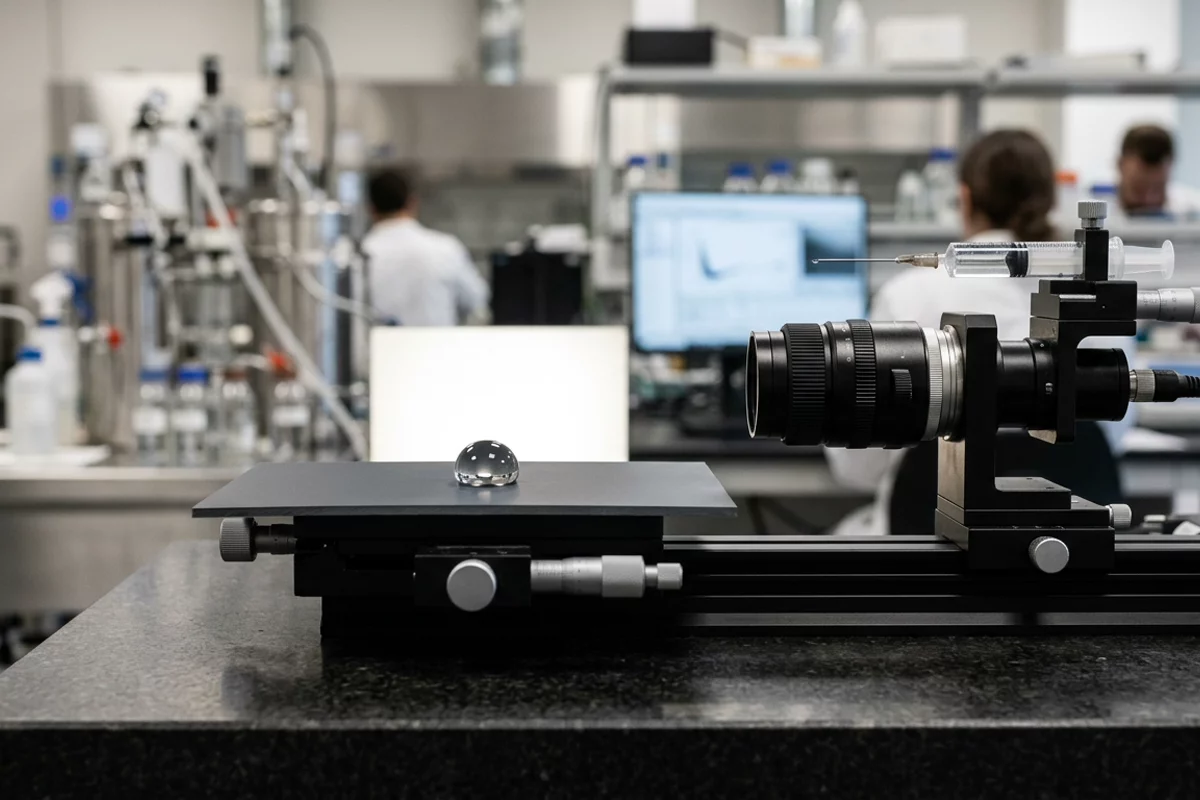
Use a surface check to answer a defined surface question. KRÜSS defines contact angle as a measure of how a liquid wets a solid. Our editorial boundary is that this definition alone supplies no PCB cleanliness or reliability acceptance criterion; those decisions need application-specific evidence.
Surface inspection boundaries distinguish visual cleanliness checks, optical wetting measurements, and formal conformal coating assembly release criteria.
| Evidence | What to record | What it does not settle alone |
|---|---|---|
| Inspection | Location, condition and observed residue or coating defect | The identity or absence of every contaminant |
| Contact-angle measurement, where suitable | Test liquid, surface, sample preparation and measurement method | Chemical cleanliness, cured adhesion or electrical reliability |
| Coating process and acceptance record | Material, application, cure and agreed test results | Whether a different board or chemistry will behave the same way |
These are proposed record fields, not prescribed tests. For a populated board, ask whether a representative witness surface is meaningful for the location of concern. Ask which areas and materials the witness sample represents, and which still need other evidence.
Common mistake: Treating a wetting measurement as a certificate that the whole PCB is ready for coating.
Review how to record contact-angle results when defining the measurement record. Do not transfer a film-printing threshold to a PCB: the scope of a dyne measurement explains a different surface-screening context, and film wetting and adhesion verification concerns ink and film combinations rather than populated assemblies.
Takeaway: State what each check answers, then retain the separate evidence needed to accept the coated assembly.
When should teams act?
Act when the news intersects with an actual supply or process decision. The dates below identify the announcement and this review; the production milestones depend on your change-control process. The source supplies no deadline for changing chemistry, no guaranteed delivery improvement and no timetable for a customer’s qualification work.
| Timing | Recommended action | Output |
|---|---|---|
| After the October 1 report; reviewed October 8, 2026 | Check whether your orders use the affected regional network | Confirmed supply contact and source information |
| Before accepting a change of chemistry, source or instructions | Ask what changed and compare it with released documentation | Documented change decision |
| Before using a changed process on released assemblies | Agree sample evaluation and acceptance with the responsible teams | Application-specific evidence and release decision |
For an unchanged, accepted process, keep the working instructions in force while collecting answers. If a coating change is also under consideration, separate the cleaning review from that material review so the evidence remains attributable.
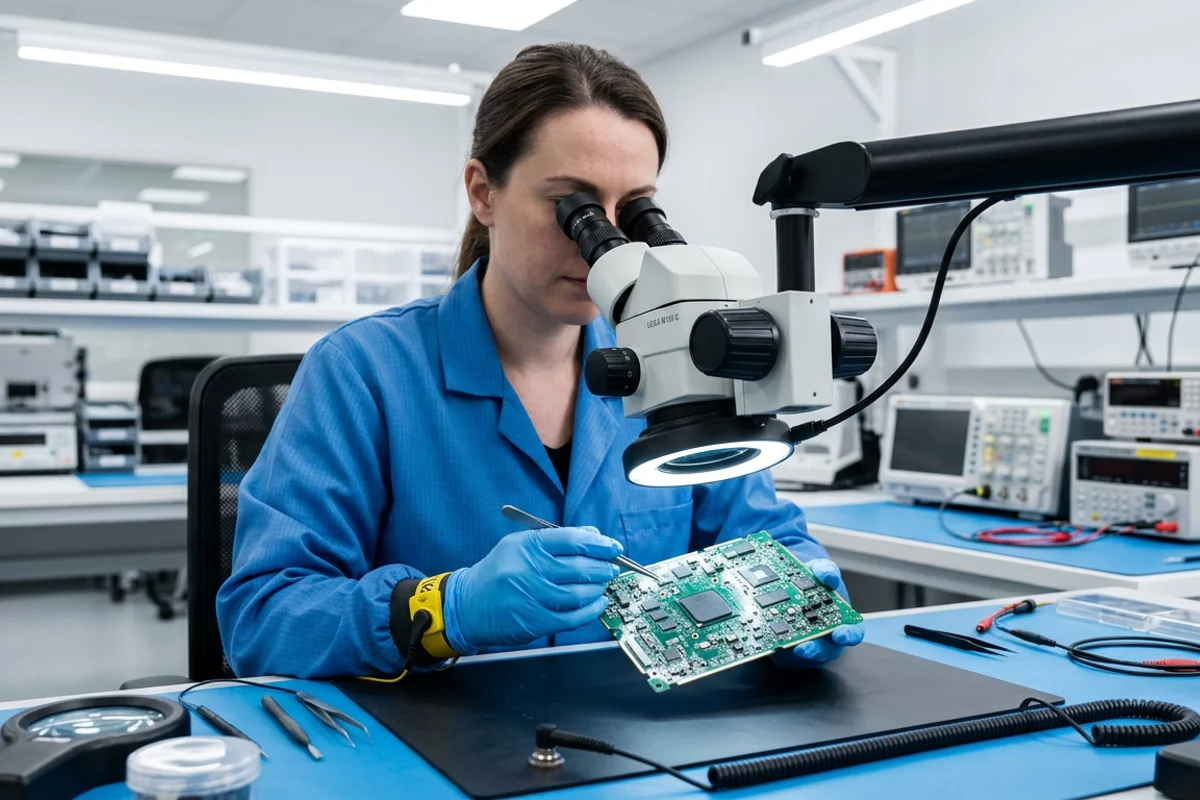
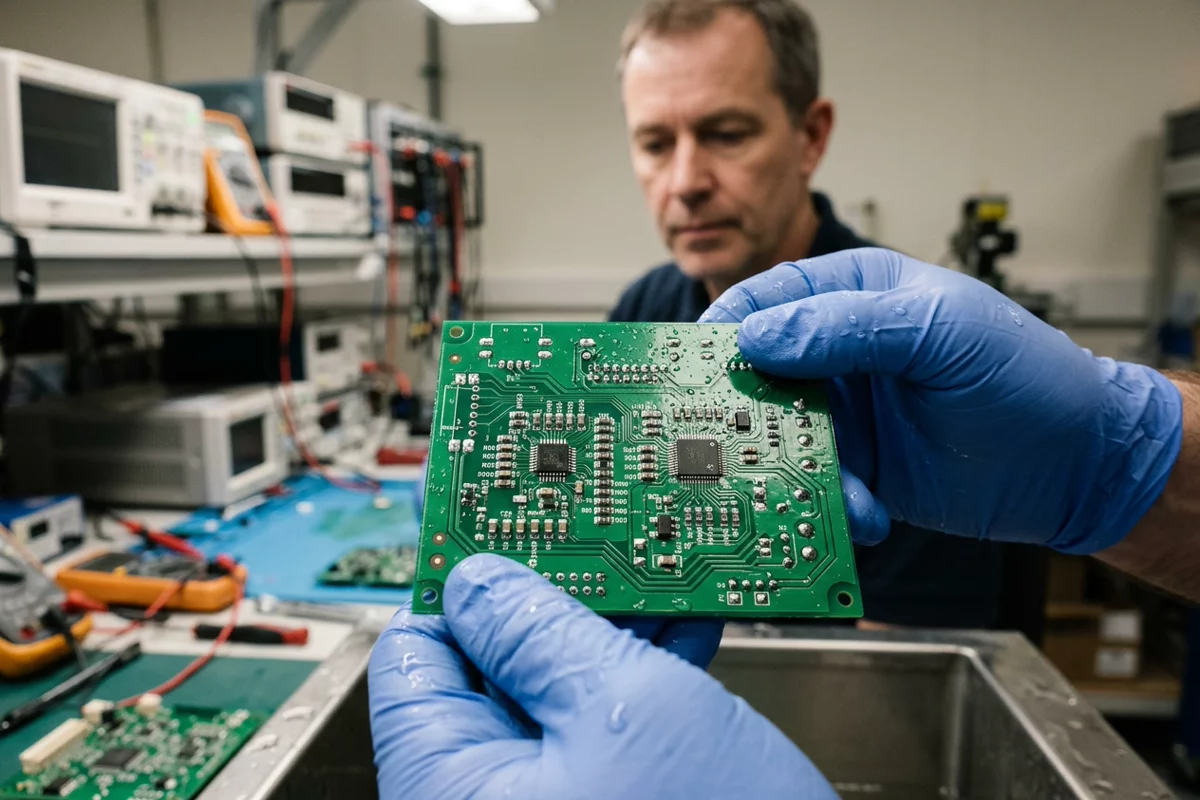
Illustrative photo — generated editorial image, not a customer audit or inspection record.
Takeaway: Trigger a review from a real change, rather than from the announcement alone.
What remains uncertain?
The announcement does not publish application-specific preparation instructions or qualification data for your board. The practical next step is to identify who owns each missing answer and what record would resolve it. “Technical support expanded” is not a substitute for a documented recommendation for the selected assembly.
| Unresolved item | Who can confirm | Evidence to request or retain |
|---|---|---|
| Manufacturing source and delivery terms for an order | Supplier or distributor | Order-specific confirmation |
| Cleaner compatibility with assembly materials | Chemistry supplier and process engineer | Current technical instructions and relevant evaluation |
| Preparation suitable for the chosen coating | Coating supplier and coating engineer | Product instructions and sample records |
| Drying, handling and masking requirements | Material suppliers and process owner | Approved process instructions |
| Acceptance of the finished assembly | Quality and product owner | Agreed inspection, adhesion and reliability evidence as applicable |
Where wetting analysis forms part of that evaluation, use the contact-angle instrument selection questions. Keep any PCB-specific acceptance criteria outside the scope of this general explainer until the responsible team has established them.
Takeaway: Turn an unknown into an assigned question with a named confirming document.
When this does not apply
This checklist does not authorize a chemistry substitution, specify a solvent recipe, establish a cleanliness limit or certify a coated board. An approved process may establish that a particular assembly can be coated without a separate cleaning operation; this article does not overturn that decision. Follow the applicable material instructions, assembly requirements and site procedures.
Film wetting guidance is background, not a PCB acceptance standard. When selecting a surface check, review the dyne-test versus contact-angle comparison to distinguish the measurement methods, then establish whether either belongs in your assembly plan.
Takeaway: Keep application-specific preparation and acceptance with the people responsible for the assembly.
Method and sources
This page combines the KYZEN announcement, its SMT Today reproduction, a coating manufacturer’s preparation instructions and a measurement supplier’s definition. The announcement and its reproduction count as one company-origin account. The diagrams and handoff tables are editorial organizing tools, not observations from the Penang facility or a tested manufacturing procedure.
Sources were checked on October 8, 2026. The older coating data sheet is used for its explicit preparation instruction, not as evidence about the new facility. No unverified coating standard, formulation, price or performance number is used. For further background, the contact-angle guide explains wetting measurements, while the film-printing guide addresses a separate substrate-and-ink workflow.